


Flashbacks. Oh flashbacks.
Yes, most prominent filmmakers use them (even though younger filmmakers are advised not to). Why?
Not everything deserves a flashback.
You don’t want to use/overuse them for at least four reasons: 1) in alluding to things in the past minimally, you actually leave the audience wanting more; 2) you don’t want to disrupt the narrative’s pace, 3) having too many flashbacks in a screenplay bloats a production budget, and 4) you should avoid being lazy and/or hacky at all costs;
BUT
When flashbacks are absolutely necessary, here are several different ways to format them.
Let’s Look at Parasite:
Method One
Use this method if you have several locations in the overall flashback. Put “Flashback” in each of the sluglines and then create an action line that denotes the end of the flashback.
Here, Ki-Tek recounts what happened after the murderous birthday party in voiceover with the images supporting it.
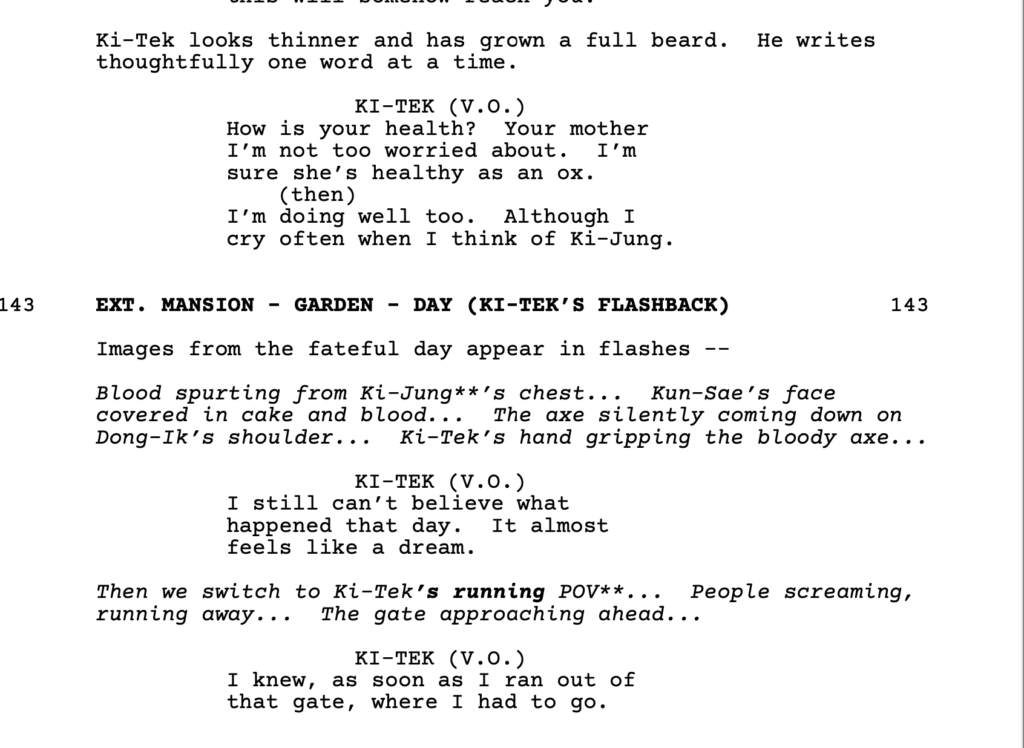
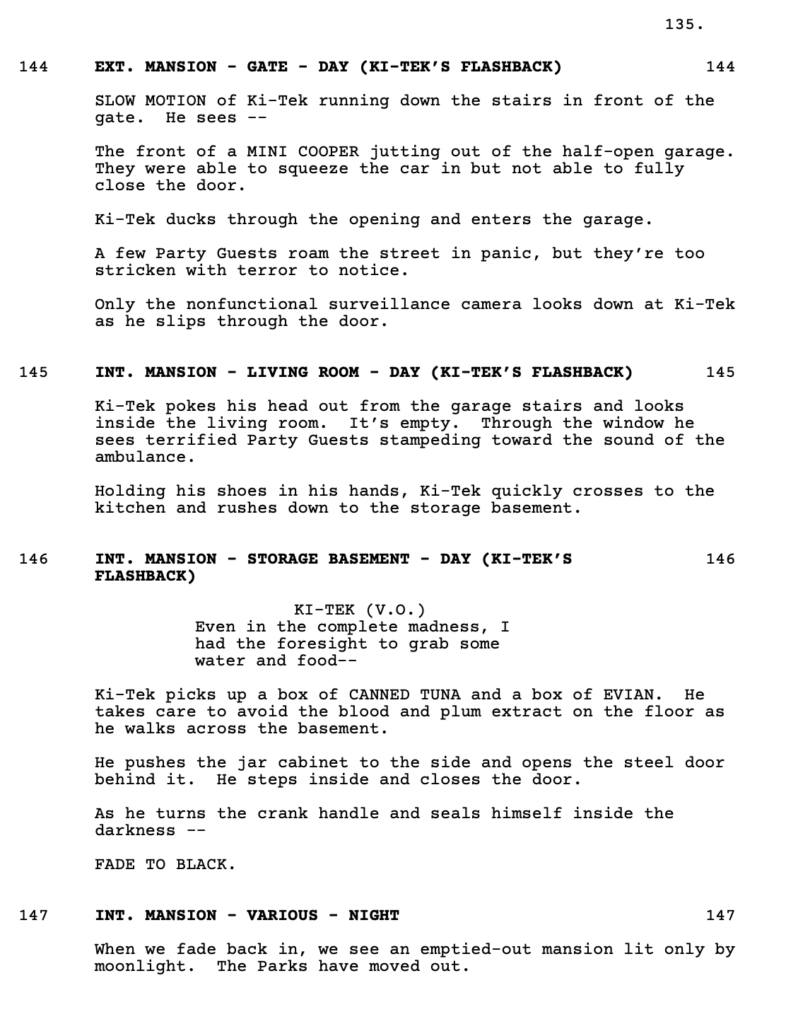
Note the sluglines for all of the scenes and the “FADE TO BLACK” that gets us back to the present. (Note: it’s a stylistic choice if you want to put parentheses around “Flashback”).
Method Two
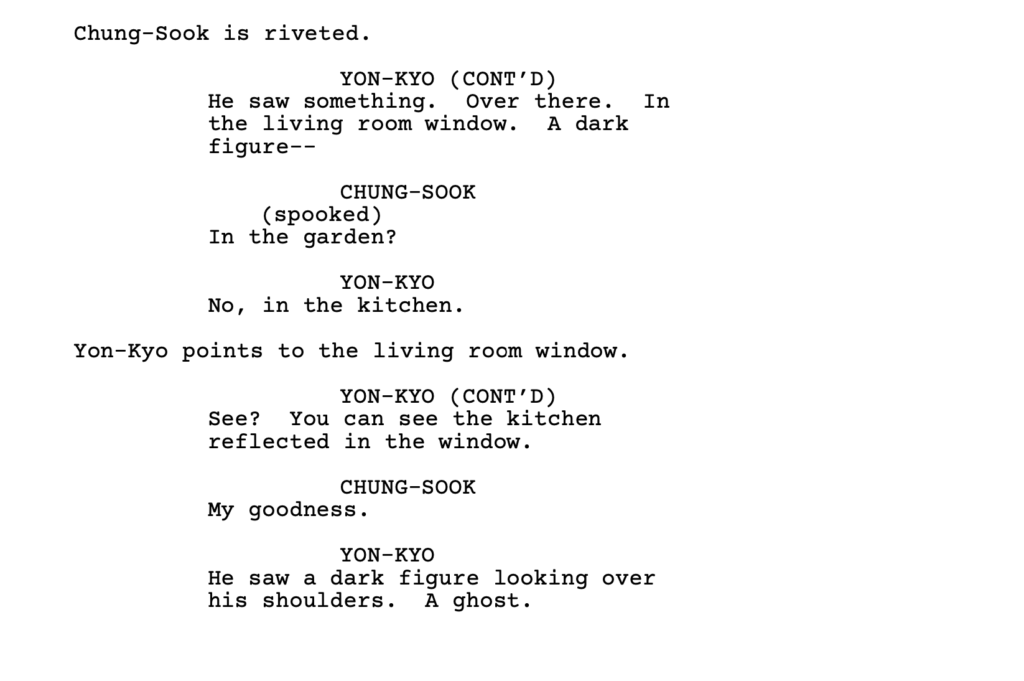
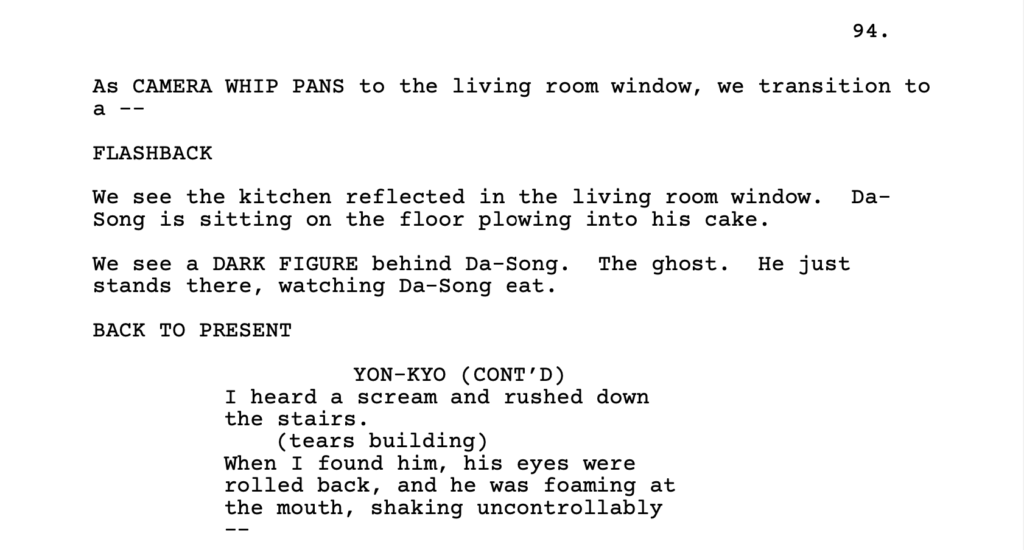
If you want to refer to a simple moment in the past, put “FLASHBACK” as a type of subslug/shot, write the scene, and then write a “BACK TO PRESENT” (or something similar).
In this instance, matriarch Yon-Kyo is explaining to Chung-Sook about her son seeing a ghost. (What’s brilliant about Parasite is that the camera whips around to show the flashback happening in the space Yon-Kyo and Chung-Sook occupy).
Other Methods
Dave Trottier outlines more variations in The Screenwriter’s Bible on pages 269-272. I’m not going to outline all of them here (because I recommend you pick up his book), but I do want to include an excerpt from it about quick flashes.
Quick flashes
On rare occasion, you might have a situation where a character recalls a series of flashbacks in succession. Handle that with the same format you’d use for a MONTAGE or SERIES OF SHOTS.
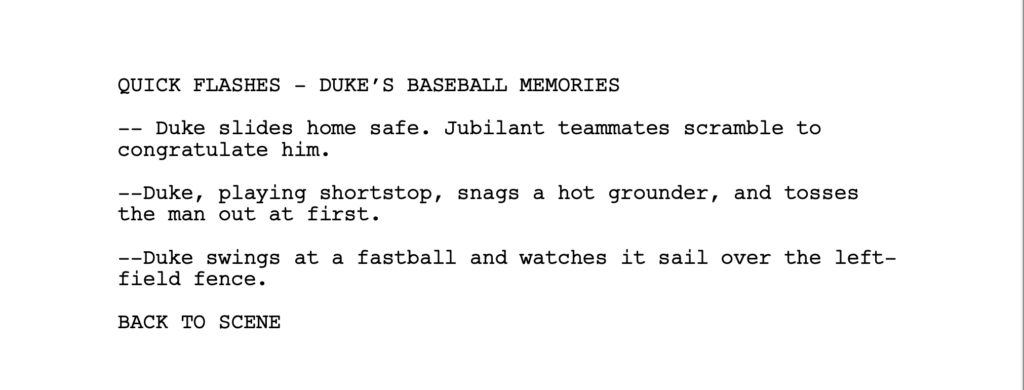
In effect, the above is a FLASHBACK MONTAGE, and you could call it that.
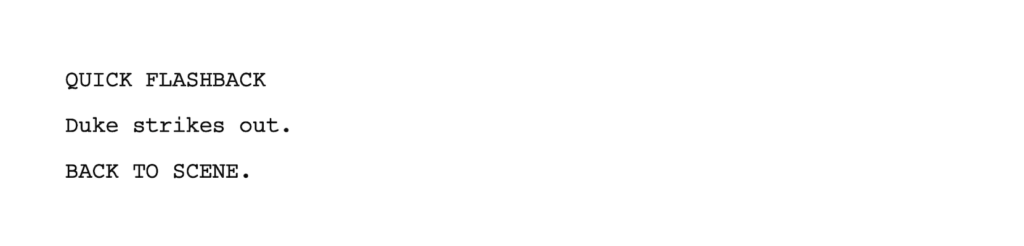
If you have just one quick flashback, use the following format:
Formatting flashbacks don’t need to be hard. But if you have any questions, please let me know.